
Primary Suspension and Wheelset Guidance
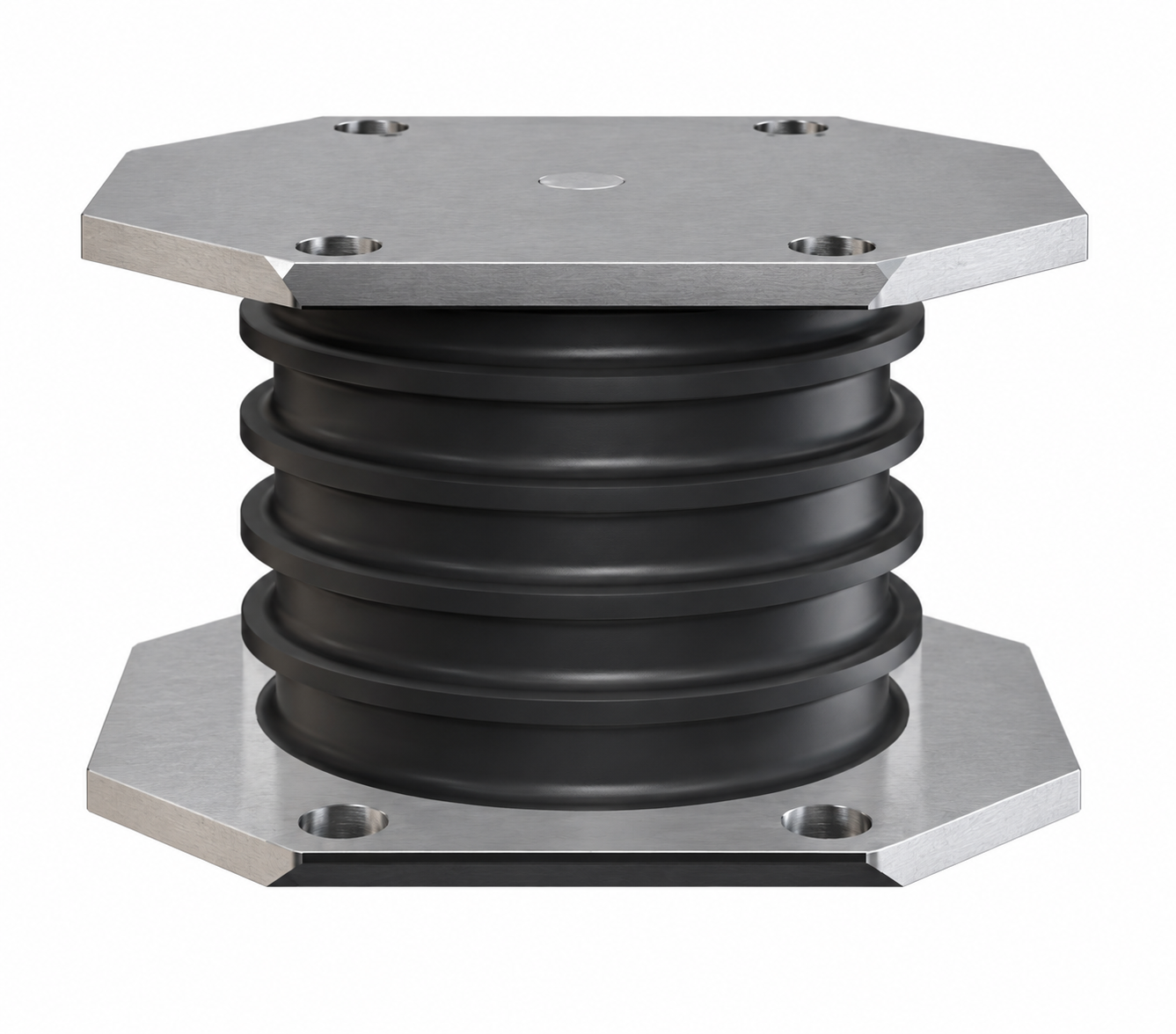
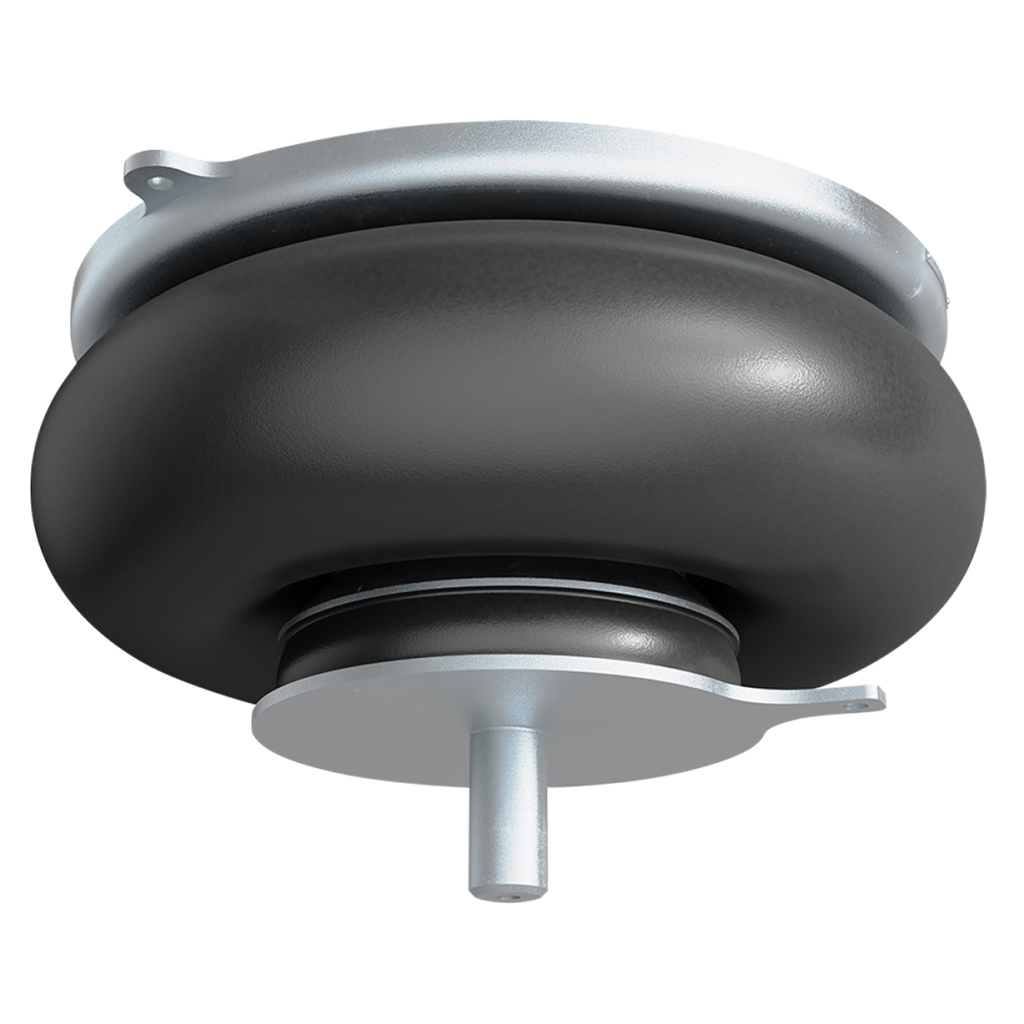
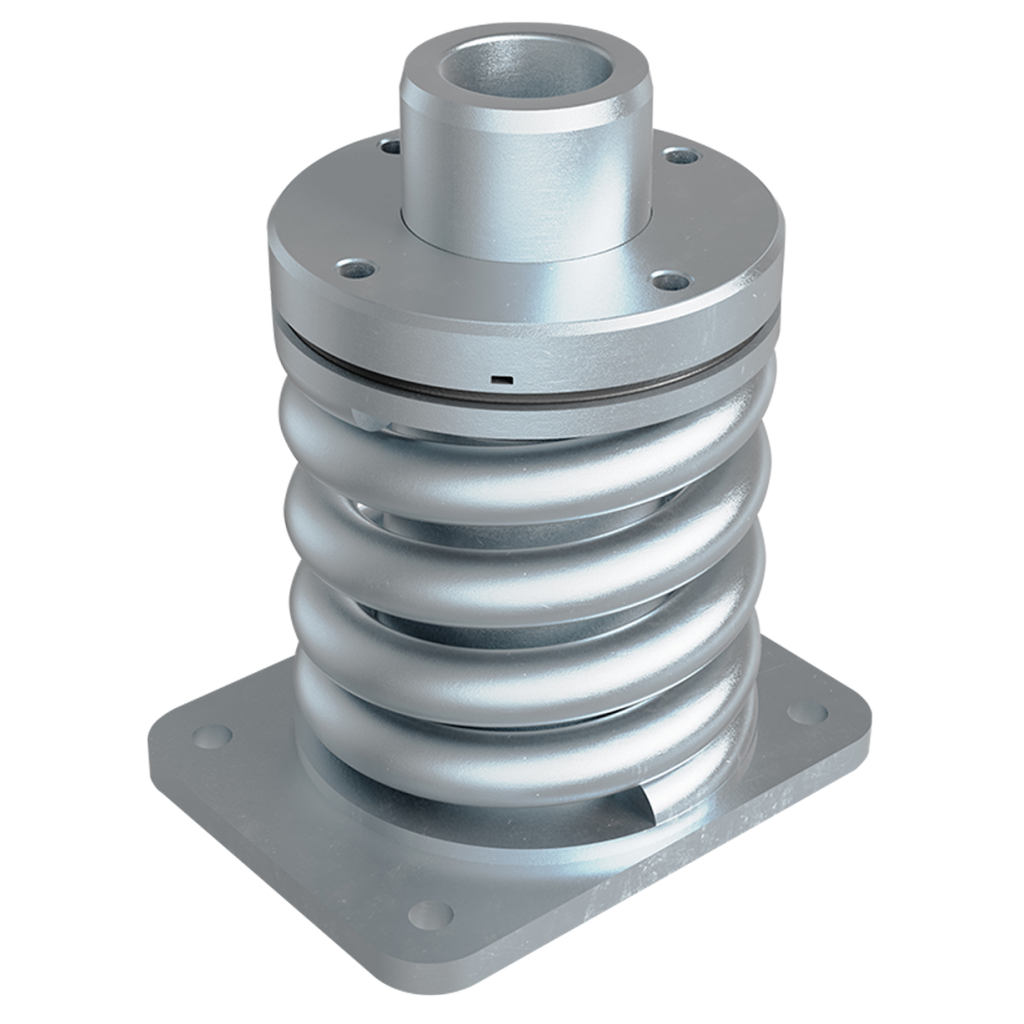
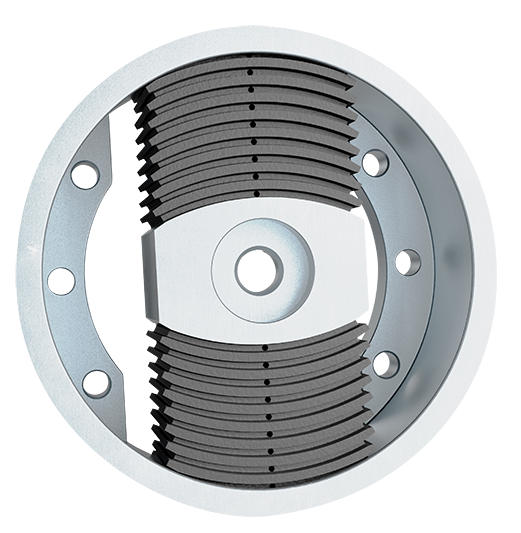
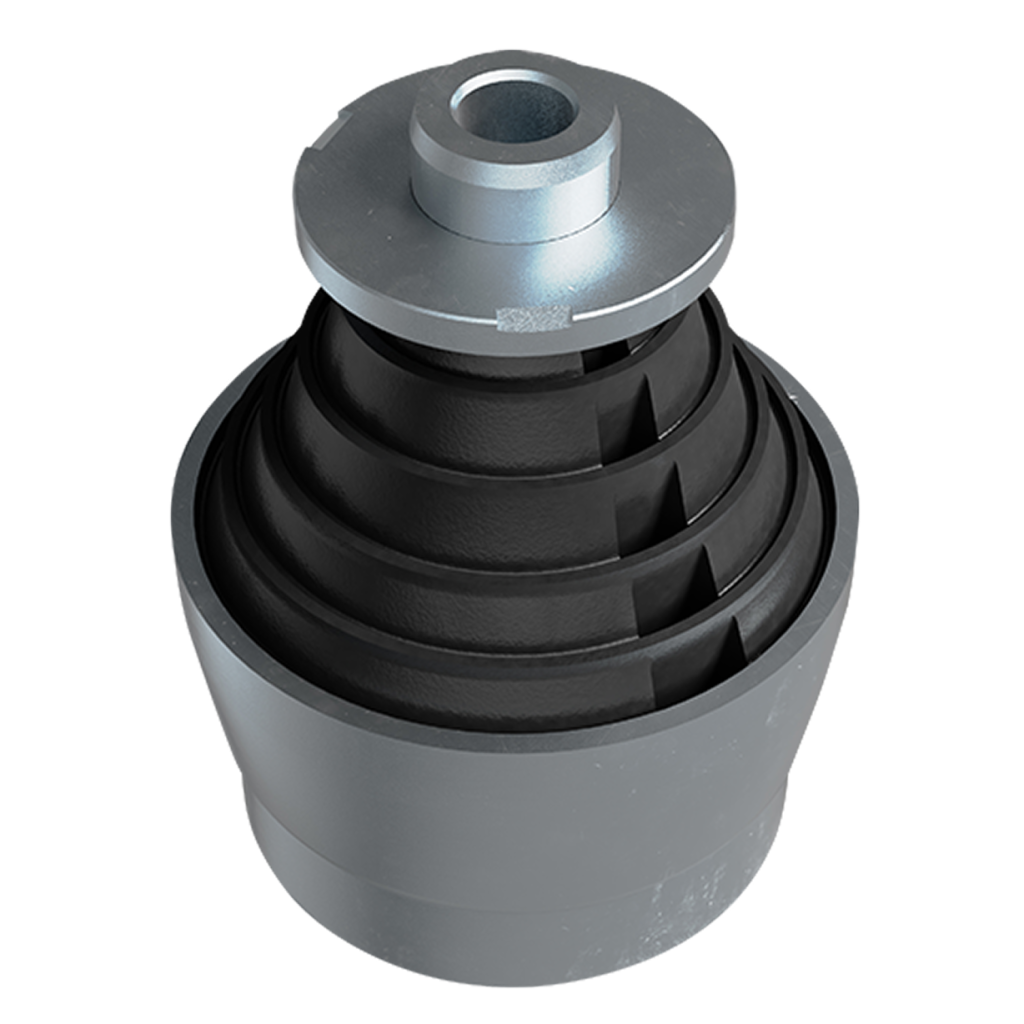
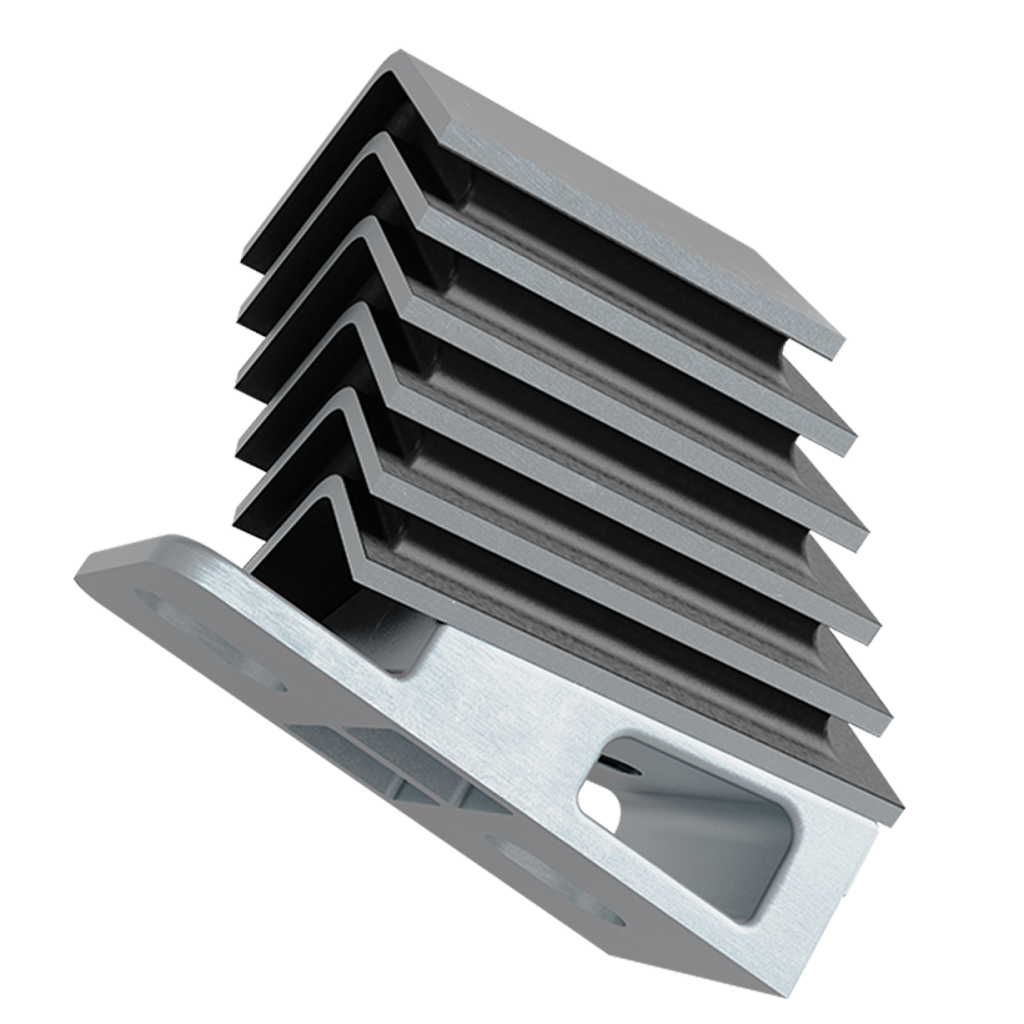
A layer spring performs several suspension functions within a compact component. The elastomer layers deform under load, while the intermediate metal plates control the deformation pattern and provide structural stability.
By adapting the geometry and arrangement of the individual layers, the spring can provide comparatively compliant vertical suspension while maintaining the higher lateral and longitudinal stiffness required for controlled wheelset guidance.
The inherent damping behaviour of the elastomer also helps reduce the transmission of vibration and dynamic excitation through the bogie structure.
Compact Multi-Layer Design
The laminated construction enables suspension and guidance characteristics to be integrated into a relatively small installation envelope.
This is particularly useful in tram, metro and other urban rail bogies where packaging space around the wheelset and primary suspension is limited. The concept is therefore well suited to low-floor vehicle architectures and other compact bogie arrangements.
Key Technical Benefits
- combined suspension and wheelset-guidance function;
- defined vertical, lateral and longitudinal stiffness characteristics;
- compact installation dimensions;
- reduction of vibration through elastomer damping;
- controlled transmission of forces between wheelset and bogie;
- suitability for restricted installation spaces;
- robust bonded elastomer-metal construction;
- maintenance-free operation of the spring element.
Applications in Rail Vehicle Bogies
Layer springs are primarily used in the primary suspension of trams, metro vehicles, light rail vehicles and comparable urban rail applications.
They are particularly relevant for compact and low-floor bogie designs where vertical suspension, wheelset guidance and vibration isolation must be achieved within limited available space.
They can be supplied for scheduled maintenance, bogie overhaul, fleet refurbishment, vehicle modernisation and new rolling stock projects. Replacement solutions can also be evaluated when the original component is obsolete or no longer commercially available.
Project-Specific Manufacturing
The number and geometry of the elastomer and metal layers, component dimensions and elastic characteristics are defined according to the required suspension function, available installation space and load conditions.
Custom versions can be manufactured according to an existing technical drawing, original component, physical sample or defined customer specification.
Each application is technically reviewed and dimensioned individually before production to ensure that the required load-deflection and directional stiffness characteristics are achieved.
German Production and Quality Control
Layer springs are manufactured in Germany under quality management systems certified to ISO 9001 and ISO 22163. GMT currently lists both certifications within its quality management system.
Product-specific verification focuses on dimensional conformity and the agreed spring characteristics in the relevant load directions. Depending on project requirements, static, dynamic and service-life-related testing can form part of the validation process.
The finished products can be supplied with an EN 10204 3.1 inspection certificate in accordance with the agreed project documentation.