
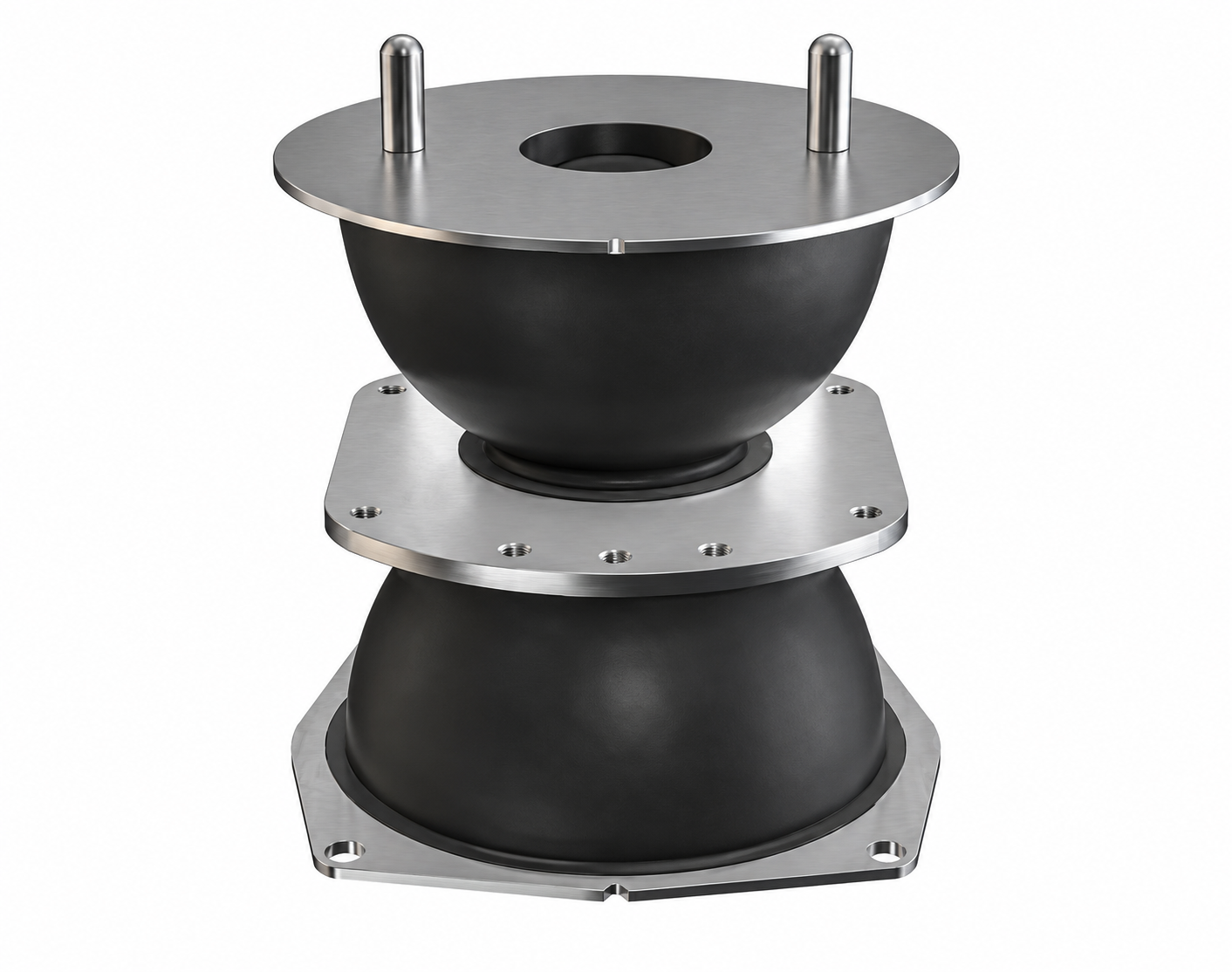
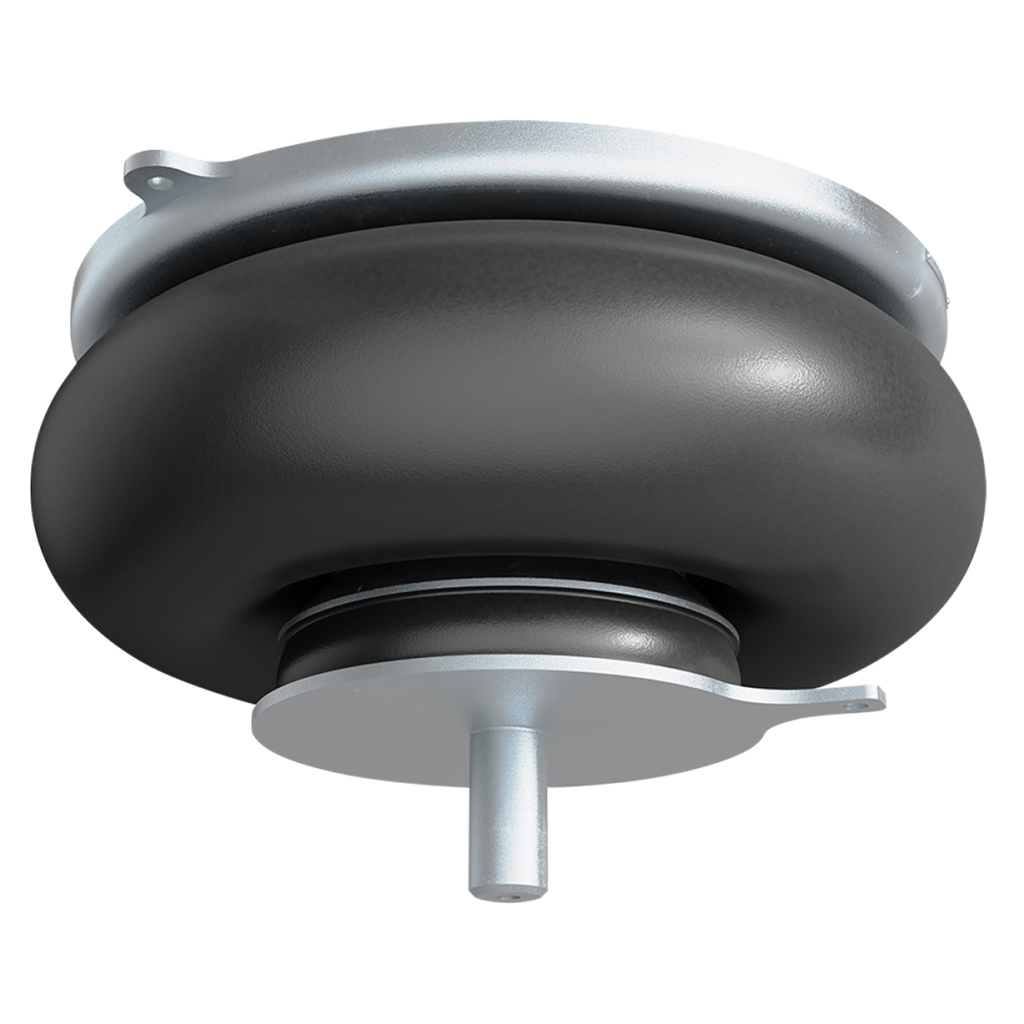
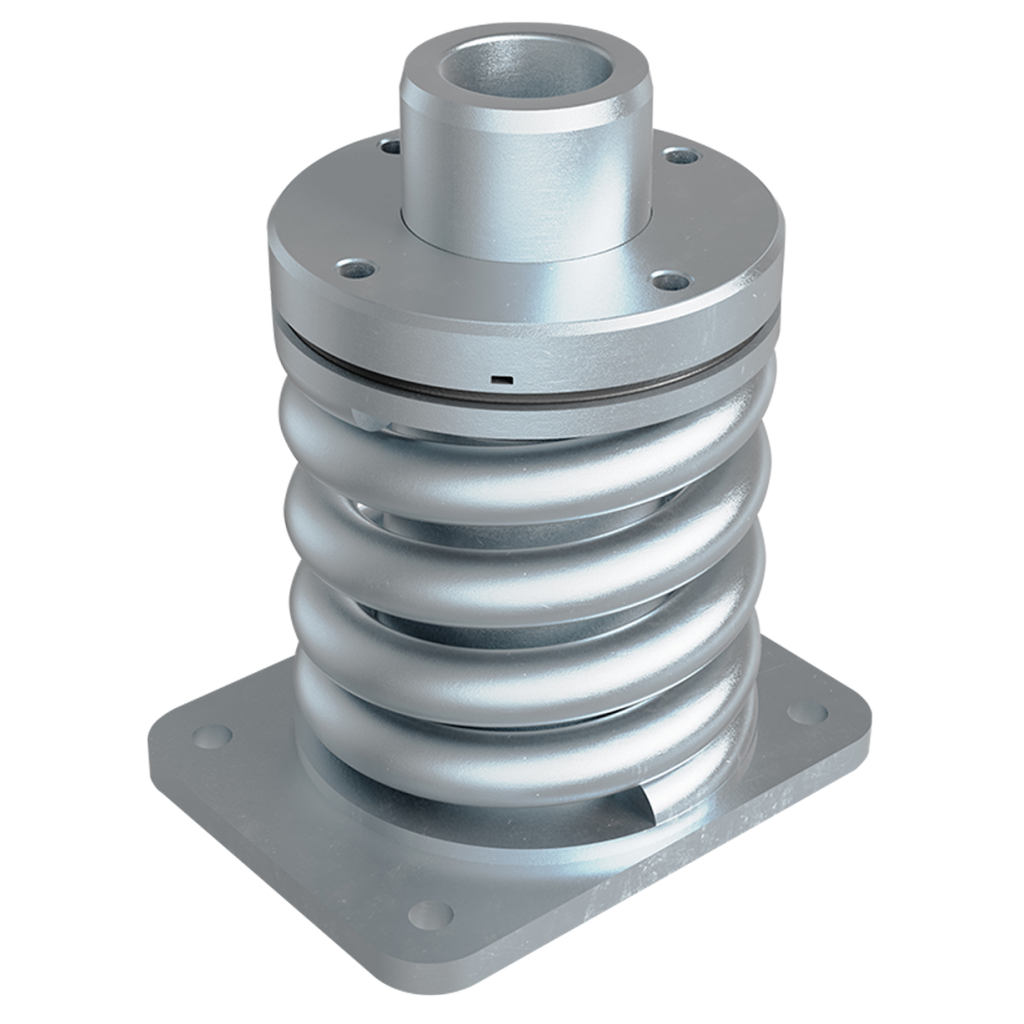
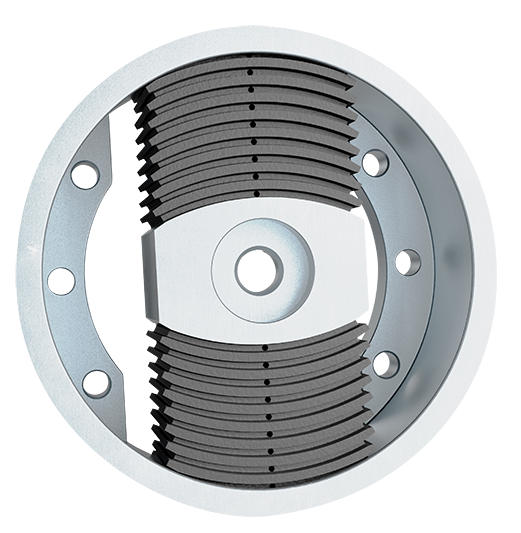
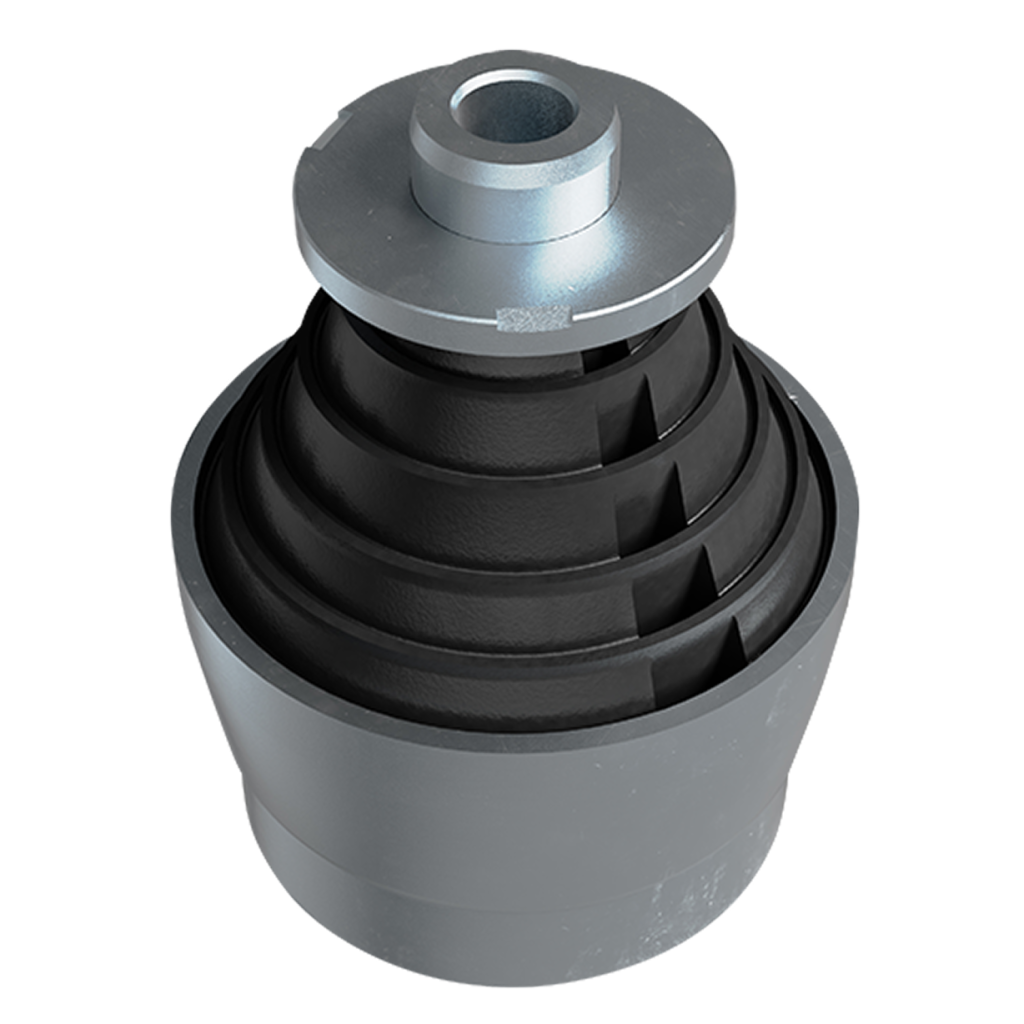
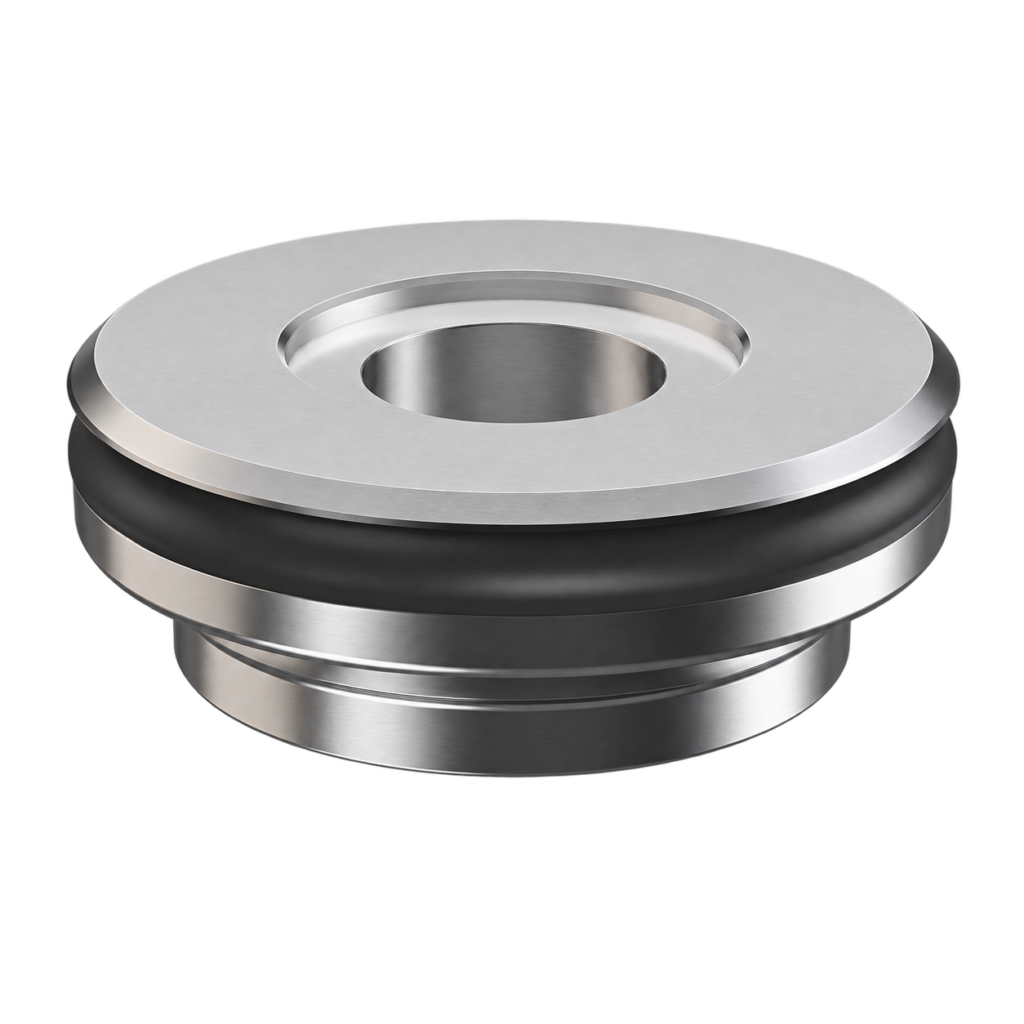
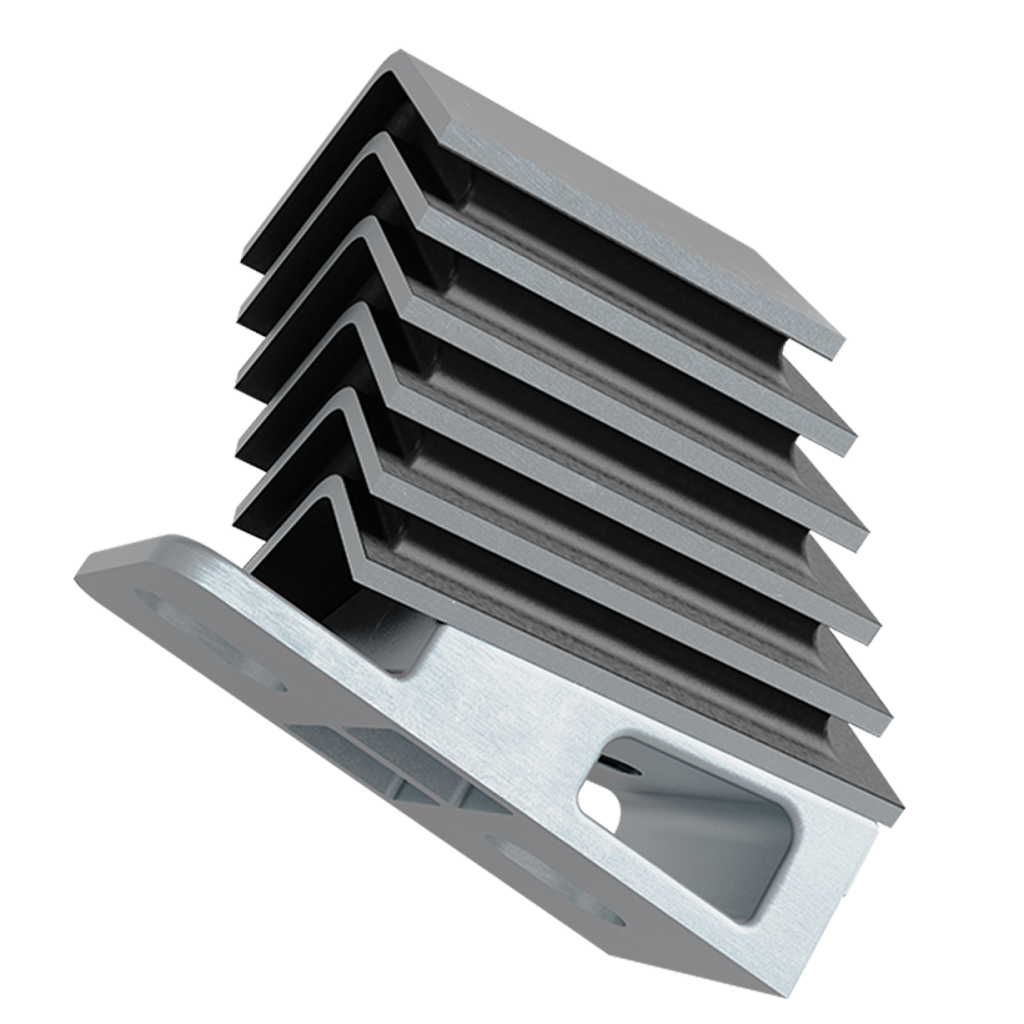
The geometry of an hourglass spring is designed to provide a non-linear vertical spring characteristic. As the vertical load increases, the effective stiffness also rises.
This progressive behaviour helps accommodate differences between empty and loaded vehicle conditions while limiting excessive vertical movement of the car body. At the same time, the comparatively compliant horizontal behaviour allows the bogie and vehicle body to move relative to one another during curve negotiation and other operating conditions.
The internal damping of the elastomer also reduces the transmission of vibration and dynamic excitation from the bogie into the car body.
High Load Capacity with Multi-Directional Flexibility
Secondary suspension must carry substantial vehicle loads without creating an excessively rigid connection between the bogie and car body.
Hourglass springs combine vertical load-bearing capability with the ability to accommodate horizontal, angular and torsional movement. This makes them particularly suitable for suspension concepts where several movement functions need to be achieved within a compact installation space.
Depending on the individual design, the spring characteristics can be adapted through component geometry, elastomer properties and the configuration of the integrated metal elements.
Key Technical Benefits
- high vertical load-carrying capacity;
- progressive vertical load-deflection characteristic;
- comparatively low horizontal stiffness;
- accommodation of lateral and longitudinal movement;
- ability to accommodate limited angular and torsional movement;
- reduction of vibration and structure-borne noise;
- compact secondary suspension arrangement;
- no external compressed-air supply required;
- low-maintenance elastomer suspension concept;
- reliable performance under repeated static and dynamic loading.
Applications in Rail Vehicle Secondary Suspension
Hourglass springs are used between the bogie and vehicle body in secondary suspension systems for rail vehicles.
Typical applications include passenger coaches, regional and commuter vehicles, trams, light rail and metro vehicles. Hourglass secondary suspension systems are also used in selected locomotive applications.
Within our vehicle structure, this covers Passenger Coaches, Trams, Metro, EMUs, DMUs and Locomotives, depending on the individual bogie and suspension design.
The components can be supplied for scheduled maintenance, bogie overhaul, fleet refurbishment, vehicle modernisation and new rolling stock projects. Replacement solutions can also be evaluated where existing springs are discontinued or no longer commercially available.
Project-Specific Manufacturing
The external geometry, elastomer characteristics, metal components and mounting interfaces are defined according to the required vehicle load, vertical and horizontal stiffness, permissible movement and available installation space.
Project-specific versions can be produced according to an existing technical drawing, original component, physical sample or defined customer specification.
Each application is technically reviewed before production to ensure that the required load-deflection behaviour, movement capability and installation conditions are taken into account.
German Production and Quality Control
Secondary spring elements are manufactured in Germany under quality management systems certified to ISO 9001 and ISO 22163.
Product-specific verification focuses on dimensional conformity and the agreed vertical, lateral and longitudinal spring characteristics. Depending on the project requirements, static and dynamic testing, characteristic-curve verification and service-life evaluation may form part of the validation process.
The finished products can be supplied with an EN 10204 3.1 inspection certificate in accordance with the agreed project documentation.