
Elastic Wheelset Guidance in Primary Suspension
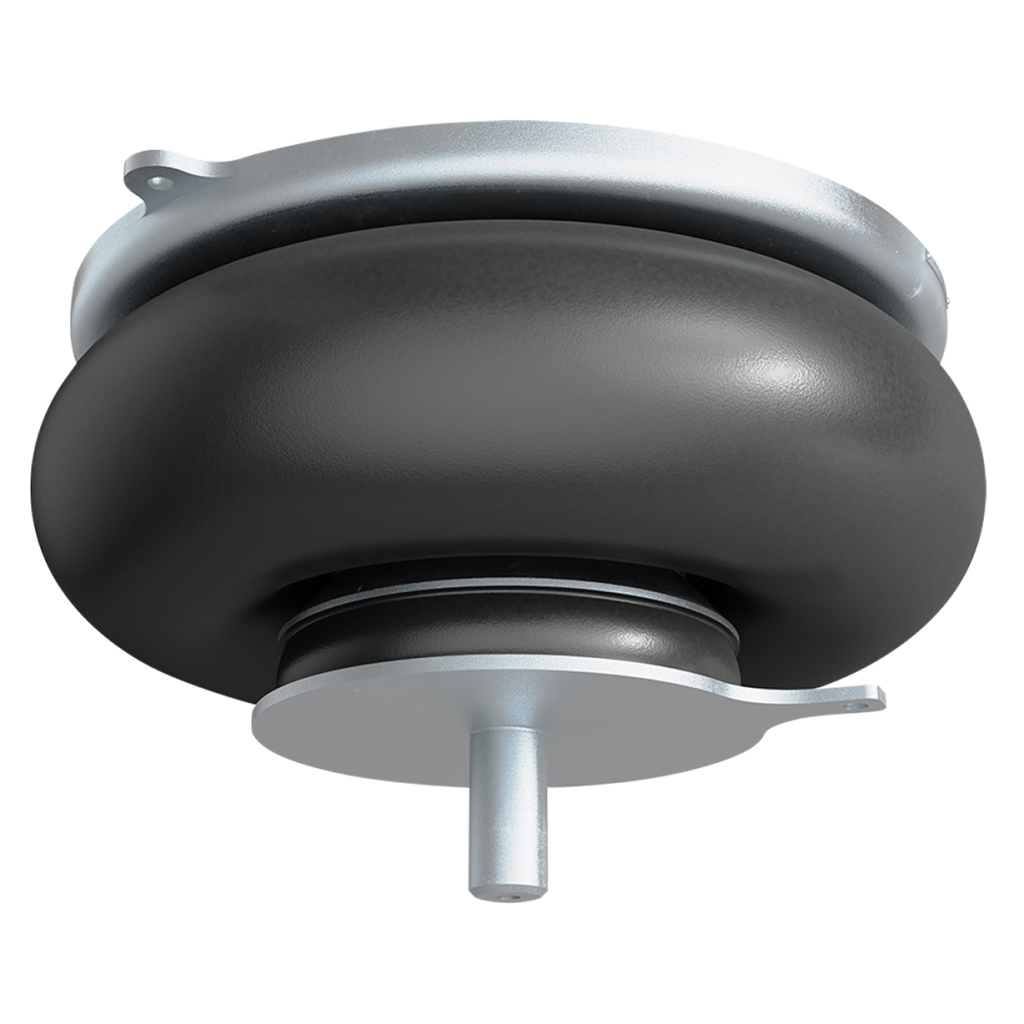
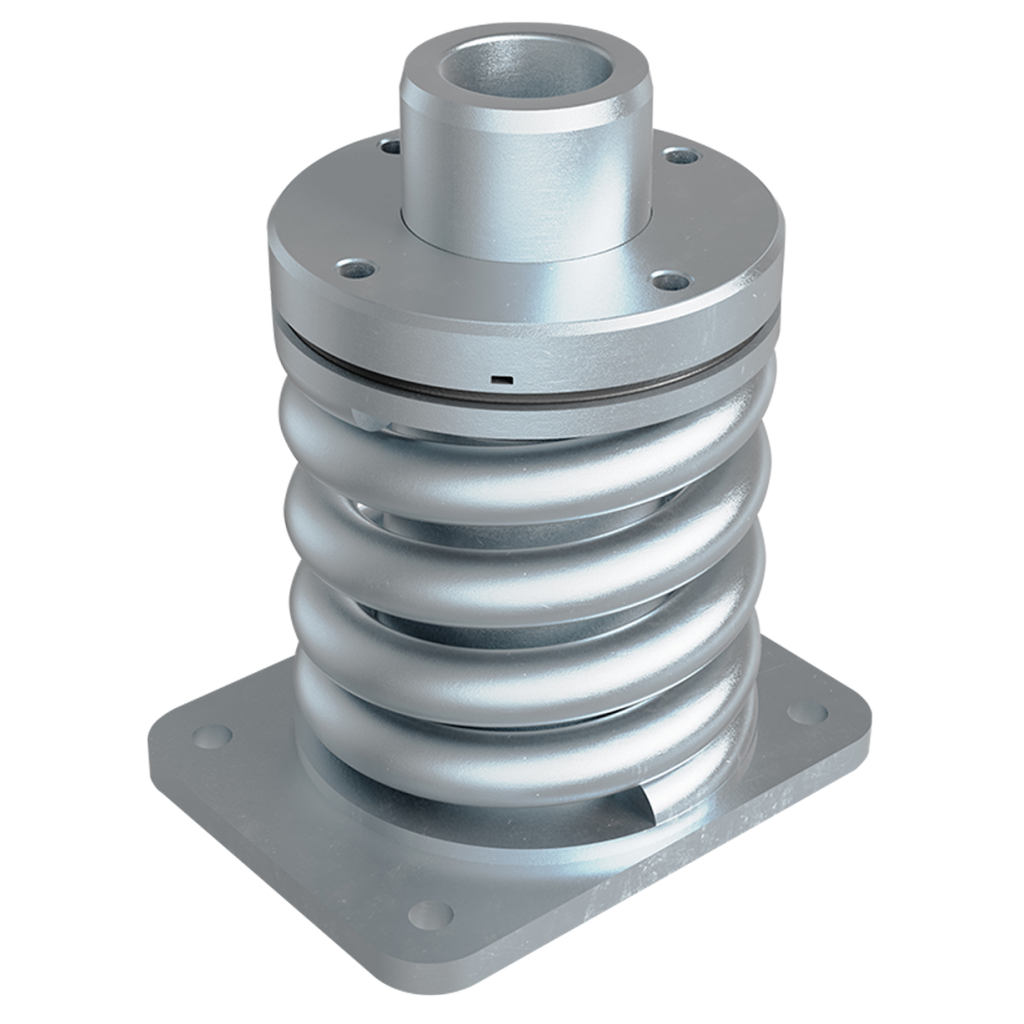
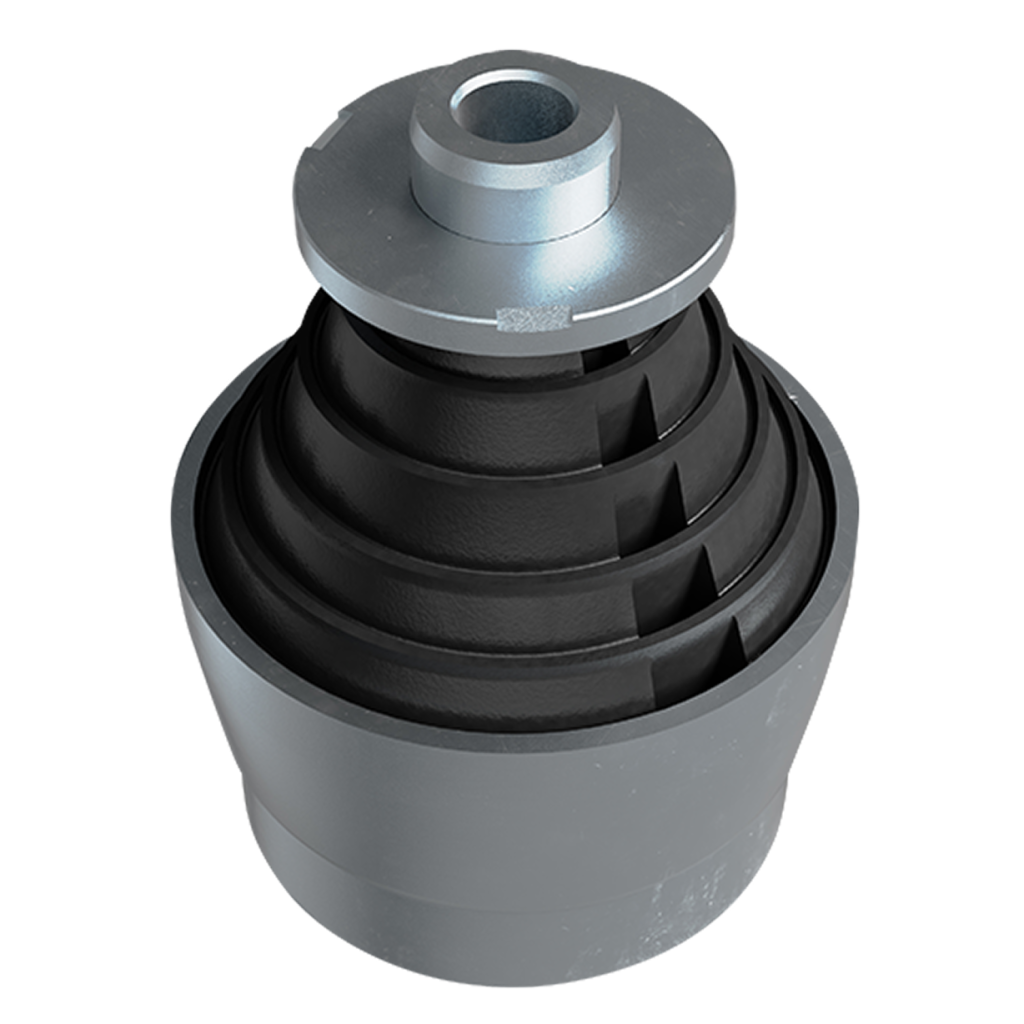
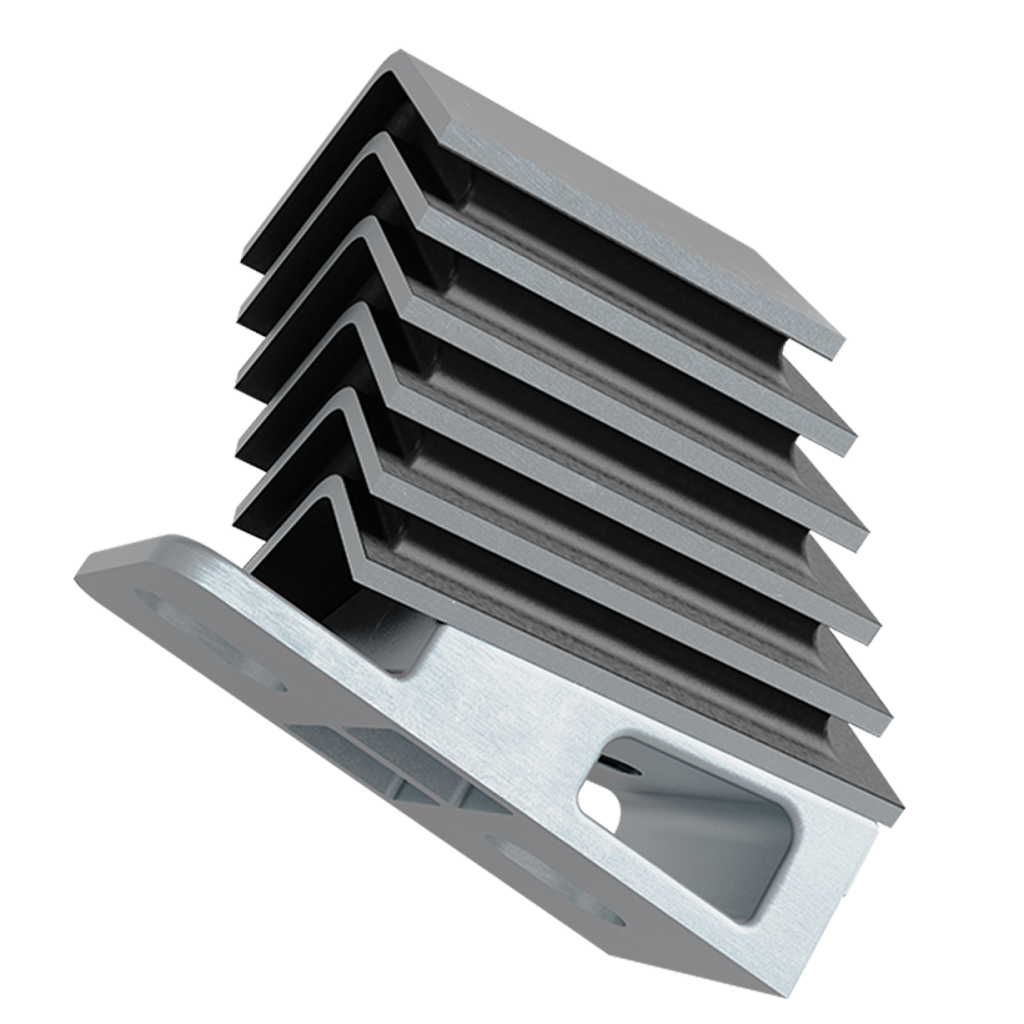
Guide springs are used where the axle or wheelset must be guided elastically in relation to the bogie frame.
During operation, they transmit vertical and lateral loads as well as longitudinal forces generated during acceleration and braking. At the same time, the elastomer section provides damping and controlled flexibility within the primary suspension.
This makes guide springs particularly suitable for compact bogies where suspension, damping and wheelset guidance need to be combined within a limited installation space.
Key Technical Benefits
- elastic guidance of the wheelset and axle bearing arrangement;
- defined longitudinal and lateral stiffness;
- vertical spring deflection within the primary suspension;
- transmission of acceleration and braking forces;
- reduction of vibration and dynamic force transmission;
- support for stable track guidance;
- compact integration into bogie suspension systems;
- project-specific stiffness and damping characteristics;
- contribution to lower maintenance requirements;
Applications in Railway and Urban Rail Vehicles
The geometry, elastomer compound and spring characteristics are developed according to the bogie design, axle guidance concept and operating requirements.
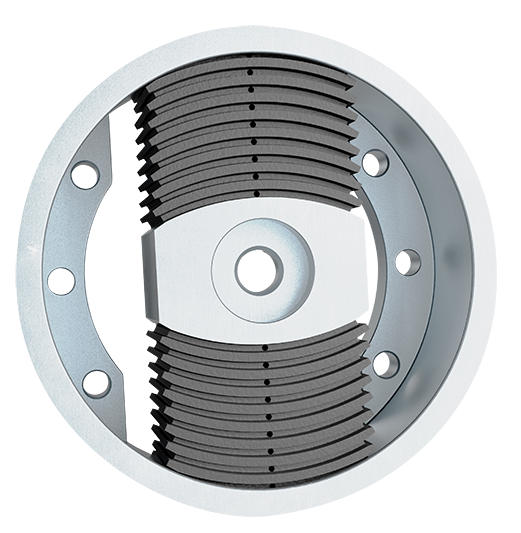
Depending on the required behaviour, the rubber body can be configured to achieve defined stiffness characteristics in different directions. Special geometries, including recesses in the elastomer section, may be used where different longitudinal and transverse stiffness values are required.
Custom guide springs can be manufactured from an existing technical drawing, original component, physical sample or defined customer specification. Each application is technically reviewed and calculated before production.
Project-Specific Manufacturing
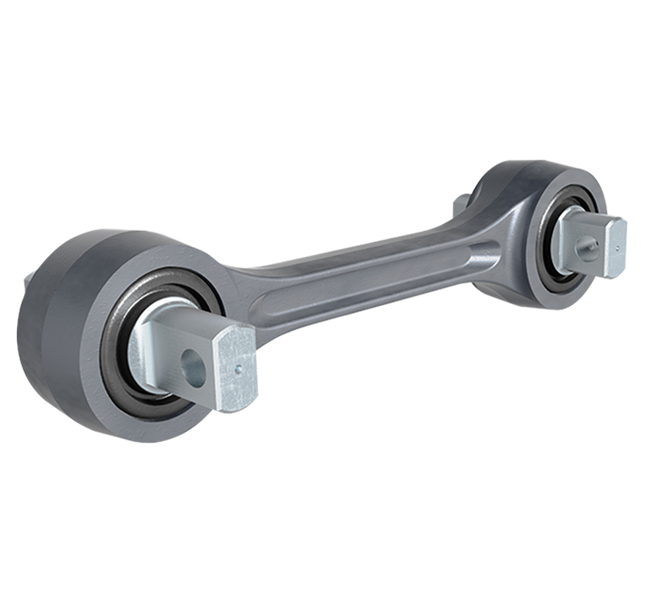
Steering rods are manufactured in different lengths, connection arrangements and bearing configurations according to the intended bogie design.
Custom versions can be produced according to an existing technical drawing, original component, physical sample or defined customer specification.
Each application is technically reviewed and calculated individually before production to ensure that the component meets the agreed force-transmission, movement and installation requirements.
German Production and Quality Control
Guide springs are manufactured in Germany under quality management systems certified to ISO 9001 and ISO 22163.
Product-specific verification focuses on dimensional conformity and the agreed vertical, longitudinal and lateral spring characteristics. The load-deflection and stiffness behaviour is evaluated according to the requirements of the individual bogie and suspension arrangement.
The finished products are supplied with an EN 10204 3.1 inspection certificate.